
Rehab Net Spring Seminar - Cycling and Running Injuries and Rehab

March 11, 2023
8:00 AM - 5:00 PM
Add to Calendar
Little Rock Marriott
3 Statehouse Plaza
Little Rock, AR 72201
Directions
Spring is here and its time for people to get out cycling and running again so its a great time to brush up on your knowledge and skills pertaining to these activities, the injuries associated with these activities and how best to rehabilitate athletes and novices a like.
Rehab Net presents a two part program for 6.0 Contact hours on March 11, 2023 at the Little Rock Marriott in Little Rock, AR.
8:30am -12:00pm Bike Fitting and Cycling Rehab - Maxwell Sawyer, PT, DPT
1:30pm - 4:30pm Evidence Based Treatment of the Whole Runner- Alex Habegger, PT, DPT, OCS
The courses are pre-approved by the APTA Arkansas and BOC for 3.0 Contact hours each (total of 6.0) for physical therapists, physical therapist assistants and athletic trainers. Rehab Net (P3532) is a BOC approved provider of continuing education for athletic trainers.

Maxwell Sawyer, PT, DPT. is a physical therapist and bike fitter located in Northwest Arkansas. Maxwell began his cycling career as a triathlete and road racer in Central Texas, ultimately transitioning towards bicycle fitting in 2013. Maxwell has since taken his passion for bicycle racing and bike fitting into the rehab clinic in order to best serve cyclists from recreational riders to professional racers on and off of the bike.
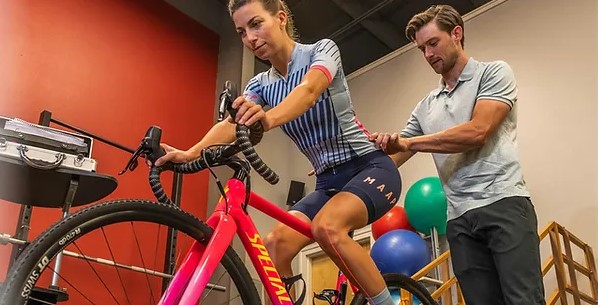
Course Description: Cycling for fun, competition and rehabilitation is popular. This course will look at how to help the weekend enthusiast to the super competitive cyclist by discussing and demonstrating how to fit the bike to the rider to prevent injuries. However, no plan is one hundred percent full proof on preventing injuries so this course will look at the typical cycling injuries and the techniques you can use to help those patients with their rehabilitation. Hear from a physical therapist that not only treats lots of cycling injuries, but is also a competitive tri-athlete. Dr. Sawyer speaks from personal experience from on and off the bicycle.
Course Objectives
After the course, attendees will:
- Have a better understanding of the parts of a bicycle and how they can be manipulated to improve rider comfort and biomechanics to prevent injury.
- Have a better understanding of the common cycling injuries and how to treat with consideration to return to cycling.
- Be able to implement rider analysis and incorporate bike fitting into a patient’s plan of care.
- Be able to identify and explain common bike injuries
- Be able to explain and use proper techniques for treating each type injury and maximize recovery.
8:30-9:30 Cycling Biomechanics and Bicycle Anatomy
- Types of bikes/riders most often seen in the clinic.
- Biomechanics and movement requirements for each rider category.
- Parts of the bicycle and how they can affect rider mechanics.
9:30-10:30 Cycling Injury and Therapy Considerations
- Common overuse injuries associated with cycling.
- Common traumatic injuries seen in the clinic.
- Therapeutic interventions targeting these common injuries for return to sport.
10:30-10:45 Break
10:45-11:45 Bike Fitting and Analysis in the Clinic
- How to begin implementing basic bike fitting and analysis into your clinic today.
- Continuing education options for growing bike fitting knowledge.

Alex Habegger, PT, DPT, is a board certified orthopedic clinical specialist and an Assistant Professor in the School of Physical Therapy at Arkansas Colleges of Health Education. He graduated from Nebraska Wesleyan University with a bachelor’s degree in exercise science, completed his Doctorate in Physical Therapy at the University of Saint Mary and is a PhD candidate at Liberty University investigating the impact of vision on dynamic balance and its ability to predict injury. Alex enjoys being active in his free time including running, working out, and playing basketball when the opportunity arises.
Evidence Based Treatment of the Whole Runner
Course Description: Treating a runner comes with its own variety of challenges. Runners come in all shapes and sizes with differing levels of mobility and differing movement patterns. This course covers the unique aspects of treating a runner from the subjective examination, evaluation, to interventions and return to running programs. This will allow one to identify common running injuries, biomechanical faults, training errors, and outline evidence-based approaches to treatment including load progression, strengthening, and conditioning. Treating the entire runner entails biopsychosocial considerations to rehab when implementing rehabilation programs all while weighing the importance of running analysis and capacity testing. These steps will allow the therapist to translate the evidence into practice come Monday morning in the clinic.
Course Outline
Introduction 1:30 – 1:45
Subjective examination of the runner 1:45 – 2:15
Common running injuries 2:15 – 2:35
Biomechanical considerations 2:35 – 3:00
Break 3:00-3:15
Movement analysis, physical exam, and establishing diagnoses 3:15 – 3:30
Running motion analysis and common movement patterns 3:30 – 3:45
Treating the injured runner 3:45 – 4:05
Strength, mobility, and control interventions 4:05 – 4:25
Summary 4:25 – 4:45
Course Objectives
- Identify 12 common running injuries and be able to group them into articular, musculotendinous, nerve, or facscial components.
- Recognize the importance of weighing biomechanical, functional, and pain-centered rehabilitation approaches.
- Identify how common patient histories shape the objective examination.
- Utilize physical examination techniques that allow the clinician to quantify strength, mobility, and control of the runner.
- Efficiently evaluate a runner and formulate a diagnosis and treatment plan.
- Identify common movement pattern faults in the runner
- Assemble a complete program to address a runners deficits in strength, range of motion, and control.
- Identify strategies to correct common movement pattern faults in runners, such as overstriding.
Cancellation Policy
1.1 Rehab Net understands that emergencies happen and that plans change, therefore we have created policies to deal with requests for refunds on courses.
1.2 Refunds can be requested prior to attending a course sponsored by Rehab Net, however if you have attended the course and received your CEUs no refund will be given.
1.3 Full refund will be provided if you cancel the course at least 10 business days before the course for any reason. Full refunds can be obtained up to 5 business days before a course if an emergency has occurred. After these deadlines you will only receive a 50% refund.
Tickets
$0.00 Rehab Net Member Registration
$149.00 Non-Member

